The Journal

What Time in Nature Does for Dentist Burnout, and What It Doesn’t

Dr. Georgios Kallivretakis

  • November 15, 2026

Estimated reading time: 9 minutes
If you’re a burned-out dentist who keeps being told to “get outside more,” this is for you. I’ll tell you what time in nature did for my own recovery, what it didn’t do, and how to try it this week wherever you live.

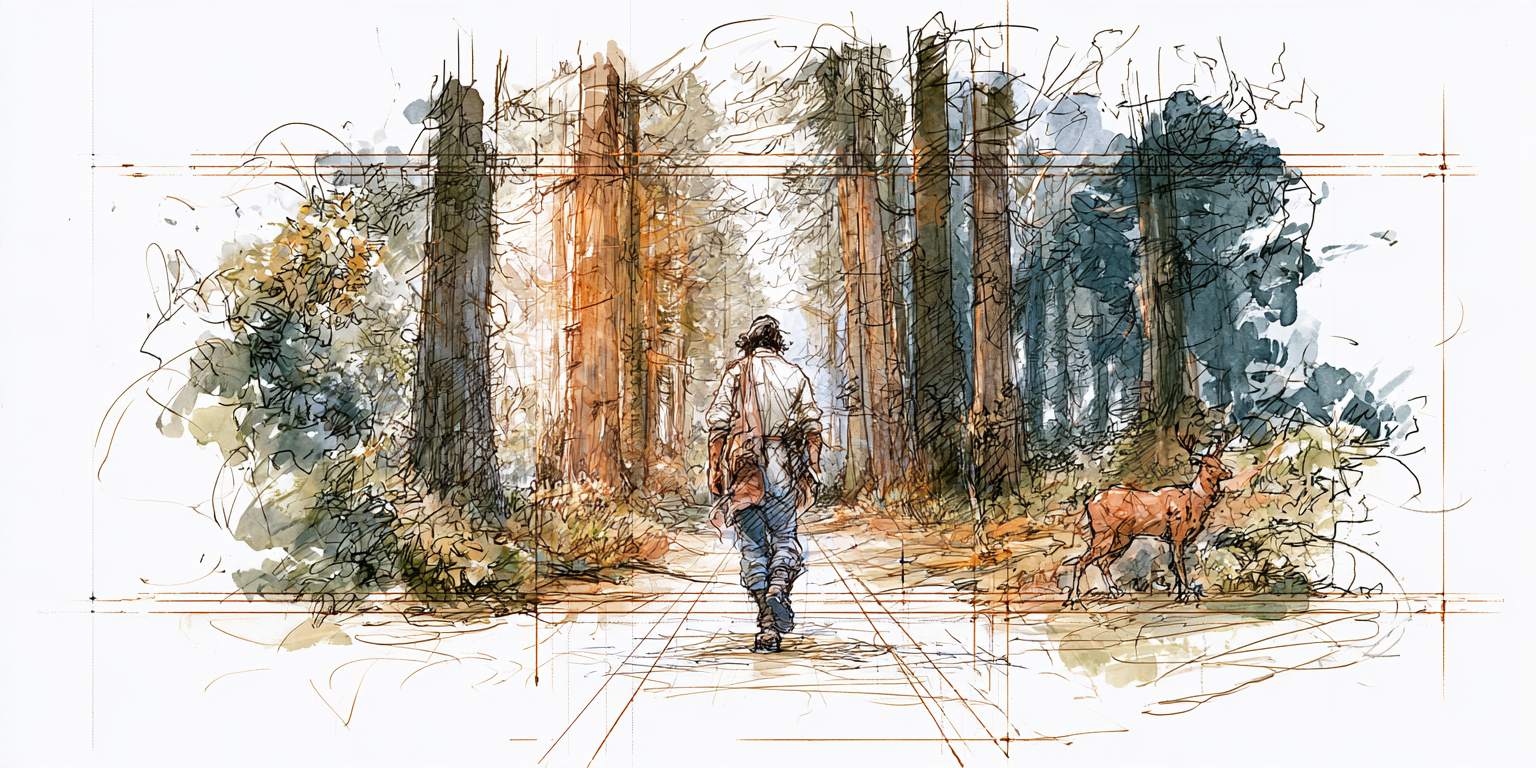
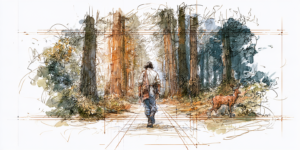
Early morning on Orcas Island is peaceful. I live in a forest there. I listen to the birds and the trees, and some mornings the deer come into my yard.

I spend part of each year on Orcas, part in Greece, and part in Cornwall, where I still do clinical work a few months a year. Moving between the forest and the treatment room has taught me something the treatment room never did on its own.

What does a clinical career do to your sense of pace?

Clinical dentistry happens almost entirely indoors, under artificial light, at a pace set by a schedule you didn’t design. After twenty-two years of it, I know what that trains into a person. You become very good at working inside tight limits: a 2 mm margin, a fixed appointment length, a set sequence of steps for almost everything you do.

What you lose, slowly, is contact with any rhythm that isn’t set by the clock. The trees don’t care what time your next patient is booked. Neither do the birds, or the light.

Can time in nature fix burnout?

No. And I’d be careful of anyone who tells you it can.

I know this from my own worst year. In 2012, nine years into dentistry, I ran outdoors every morning without fail. So I was outside every day, and I was still burned out. The running eased the headaches I had that year, and I used the relief to avoid a decision I had been circling for months: stay in my practice, or move and start again.

Exercise and scenery can ease a symptom. They can’t examine a life that no longer fits. That work is naming what is wrong, accepting where you are, and deciding what changes.

I’ll take a side, though. That work is much harder to do in a treatment room under fluorescent light, at the pace of a full schedule, than in a place where your body is allowed to slow down.

One clinical note. If the exhaustion comes with persistent low mood or hopelessness, see your doctor first. A walk is no answer to that.


“A walk in the forest has never fixed a burnout. It gives the real work a place to happen.”


What changed for me, and how slowly?

There was no single moment of clarity among the trees, however much tidier that story would be.

The thoughts always come. That part never changed. What changed is what I do with them. Now I just observe them. There is no need to follow them.

In a full clinical day there is no room for that. A thought arrives and you either act on it or push it down, because the next patient is waiting. Outside, with nothing asking for you, you can watch it pass.

These days I walk in nature for thirty minutes to an hour most days, wherever I am, and I meditate daily. Neither is a treatment. Both give me regular time at a pace that no schedule sets.

How much time outside is enough?

Less than you’d think. In a 2019 University of Michigan study, 36 city dwellers spent time in any outdoor place that gave them a sense of nature, at least three times a week for eight weeks. Their cortisol, a stress hormone, fell most efficiently when they stayed 20 to 30 minutes, sitting or walking (Hunter and colleagues, Frontiers in Psychology, 2019).

The conditions mattered as much as the minutes: daylight, no phone, no conversation, no reading, no workout.

It was a small study, and it measured a hormone, not burnout. I offer it as a starting dose and nothing more.

What if you don’t live near a forest?

It was never about the island. A park works. So does a stretch of coast, a trail, or one tree you pass on the way to work and have never stopped to look at.

What matters is regular, unhurried contact with something that runs on a timescale you didn’t set. If you want a way to begin:

  • Twenty minutes, three times a week. Protect it the way you’d protect a patient’s appointment.
  • The same place each time, so there is nothing to plan.
  • Phone off, or left behind.
  • No target. No step count, no pace, no podcast.
  • When the thoughts come, observe them. You don’t have to follow them.

The naming, the accepting and the deciding are still yours to do. They go faster when part of your week runs at a pace nobody else set.

Where is the nearest place to you that would give you twenty minutes like that?


If you want to go further, the naming, accepting and deciding are set out step by step in my book The Shift. It’s free for any dentist who wants it. You can get your copy here.

If you’d rather talk it through, book a free 30-minute conversation with me. Dentist to dentist, no pressure, and no script.


Dr Georgios (Amrishan) Kallivretakis
Dentist with 22 years of clinical experience and ICF-accredited coach (ACC). Coaching burned-out dentists in the UK and US since 2019.

OTHERS ESSAYS YOU MIGHT ENJOY….

From Skeptic to Devotee: My Transformative Journey into Meditation

Estimated reading time: 8 minutesImagine a life where your thoughts no longer control you, where inner peace is not just a concept but a daily...
Read More »

The Identity Crisis That Nearly Destroyed Me

Estimated reading time: 7 minutesOver a decade ago, I felt that heaviness in my heart. You know the one. That weight that sits on your...
Read More »
A dentist wearing scrubs and a lanyard name tag reclines on a lounge chair on a tropical beach surrounded by money laying on the sand and palm trees

Burnout Isn’t Fixed by Another Dental Course

For years I booked courses, chased experts, flew to conferences. I told myself it was about excellence. But somewhere between London and Seattle, I had...
Read More »

From 22 Years Chairside to Coaching — The Hybrid Model

Part I: How I Got Here I didn't plan to become a coach. I crashed. Twenty-two years in, my body simply said no. What came...
Read More »

The Identity Piece Nobody Warns You About

Part II: The Grief, the Stigma, and the Different Kind of Dentist. The grief surprised me. So did the stumbling explanations, the imposter syndrome, the...
Read More »
You’ve Diagnosed 10,000 Cavities but Missed the One Eating Away at You

You catch everything in your patients. The sneaky decay, the early signs, the things nobody else notices. But later that night, you're the one crumbling....
Read More »

The Most Dangerous Sentence in Dentistry

I said it for three years before I dropped my handpiece. Not metaphorically. Literally. Mid-session. Hand trembling. Patient waiting. That was 2013 — and I...
Read More »

The System Was Never Designed for Your Wellbeing

There is a conversation happening in dentistry about burnout. More webinars. More wellbeing resources. And I need to say something that conversation keeps skirting: the...
Read More »

The Sunday Dread: When Your Body Knows First

It usually arrives around 9pm on a Sunday. Not dramatic. Not a panic attack. Just a tightening. A shift in the quality of an evening...
Read More »
The Competence Trap

The better you are, the longer it takes to break. And the longer it takes to break, the worse the damage when it finally happens....
Read More »

What Recovery from Burnout Actually Looks Like

Recovery from burnout does not happen in a weekend workshop. I say this not to discourage you, but because false timelines are one of the...
Read More »

How Burnout Shows Up at Home

You finish a session and drive home. At some point on that journey you perform a transition. You put away the dentist. You pick up...
Read More »
The Dentist Who Shows Up at 4:45

the clinician you meant to be. Burnout in dentistry rarely takes the whole day. It takes the last hour first. On the narrowing window in...
Read More »
The Golden Handcuffs No One Talks About

Everyone assumes the golden handcuffs are about owning a practice. I never owned one, and for the better part of a decade I still couldn't...
Read More »
The Sunday Scaries Aren’t in Your Head

It starts around four on Sunday afternoon and nothing has actually happened yet. The dread isn't a mindset problem, and no amount of gratitude practice...
Read More »

Why Doesn’t Anyone Outside Dentistry Understand Burnout?

You can describe it precisely to another dentist and watch their face change. Try describing it to anyone else and you get a holiday suggestion....
Read More »

Your Burnout Is a Symptom. Examine It Like One.

In 2012 I managed my headaches with physio, acupuncture and a run every morning, and never asked why they kept coming back. As dentists, we'd...
Read More »

The Five Stages of The Shift, and Why Dentists Stall at Acceptance

Naming burnout is the easy part. Nearly every dentist I coach stalls at the second stage, and almost nobody explains why.
Read More »
Why “Just Take a Holiday” Doesn’t Work: The Decision Paralysis Loop

Estimated reading time: 11 minutesYou know you can’t keep going as you are, and you can’t see how to change it. A holiday rests you...
Read More »
What Time in Nature Does for Dentist Burnout, and What It Doesn’t

A walk in the forest has never fixed a burnout. But the real work of recovery is much harder to do under fluorescent light. What...
Read More »

Find me on social media!

2026 © Amrishan Harmony, LLC. All rights Reserved.